
Are You Managing Your Rural Estate One Project at a Time?
Do You Have a Complete Picture of Your Estate?
Written By Phillip Tuckwell
Do You Have a Complete Picture of Your Estate?
Rural estates rarely stand still.
Buildings need maintaining. Energy contracts come up for renewal. Tenancies change. Woodland needs attention. New planning opportunities emerge. And ideas that have been sitting in the background for years gradually become more pressing.
Understandably, many of these matters are dealt with individually.
A roof begins to fail, so repairs are arranged. A redundant building becomes a concern, so its potential is explored. An energy bill increases, prompting a review. A planning opportunity appears, and the focus shifts towards what might be possible on that particular part of the estate.
There is nothing inherently wrong with responding to individual priorities as they arise.
But when every decision is made in isolation, it can become difficult to see how the different parts of an estate affect one another, or whether time and money are being directed towards the areas that matter most.
Sometimes the most useful next step is not another project.
It is taking the time to understand the estate as a whole.
Do You Have a Complete Picture of Your Estate?
Most estate owners know their land and buildings extremely well.
But that does not necessarily mean all the relevant information exists in one accurate, accessible place.
Records may have been built up over generations. Plans might be stored in different formats or locations. Knowledge about buildings, utilities, infrastructure and occupancy arrangements may sit with several different people.
That can make it harder to answer apparently simple questions:
What buildings and structures form part of the estate?
What condition are they in?
How are they currently being used?
Where are the utilities and other important infrastructure?
Which assets require investment?
Which areas may be underused?
Where could future opportunities exist?
This is why comprehensive estate mapping and digital asset recording can be such a valuable starting point.
By documenting buildings, structures, land parcels, infrastructure, utilities and other estate assets, it is possible to create a clear digital record of the estate as it exists today.
That record then provides a much stronger foundation for every decision that follows.
Better Information Leads to Better Decisions
Good estate management is not simply about collecting information for the sake of it.
The value comes from what that information allows you to do.
Once there is a reliable picture of the estate, owners can begin to compare priorities and look at how different decisions fit together.
A building survey may identify repairs that need immediate attention. But it may also raise a wider question about whether that building is still being used effectively.
A review of the estate’s utilities may reveal potential energy cost savings. At the same time, it could influence future plans for refurbishment, development or changes in use.
A woodland management review might identify work required to protect the woodland. It may also reveal timber harvesting or other appropriate commercial opportunities.
An agricultural tenancy review could affect how land is managed now, while also informing longer-term investment or succession planning.
None of these matters exists entirely on its own.
Seeing them together makes it easier to decide what should happen first, what can wait, and where one carefully planned intervention might address several objectives.
Looking Beyond the Most Obvious Opportunity
When people think about creating more value from a rural estate, the conversation often moves quickly towards planning and development.
For some estates, that will be an important part of the picture.
Redundant buildings may have potential for alternative uses. Land may be suitable for development or promotion. Existing assets could support new commercial activities. Diversification may create more sustainable sources of income.
But development is only one way to improve estate performance.
There may also be opportunities to:
Reduce unnecessary energy costs
Improve the management of existing buildings
Plan maintenance and refurbishment more effectively
Review estate operations and responsibilities
Make better commercial use of woodland
Explore suitable events or other income-generating activities
Modernise parts of a farming business
Improve the way projects, contractors and budgets are managed
The best opportunity is not always the most dramatic one.
Sometimes a relatively straightforward operational change can provide an immediate saving. In other cases, the estate may benefit from beginning work now on an opportunity that will take several years to reach its full potential.
The important thing is to assess each option in the context of the estate’s wider priorities.
From Reactive Maintenance to Planned Investment
Maintenance will always be part of rural estate ownership.
Historic buildings, working farms, country properties and estate infrastructure all require continual care. Unexpected issues will still arise, however carefully an estate is managed.
The aim of a long-term estate strategy is not to eliminate those issues completely.
It is to reduce the number of decisions that have to be made reactively.
When buildings and structures have been properly surveyed and recorded, maintenance priorities can be considered across the estate rather than one emergency at a time.
This creates an opportunity to plan expenditure more carefully, coordinate related works and consider whether repair, refurbishment or a more substantial change would provide the best long-term outcome.
Where work is required, effective project management also becomes important.
Even relatively routine projects can involve contractors, consultants, budgets, programmes and competing operational demands. Larger refurbishment, construction or diversification schemes add further layers of complexity.
Having one coordinated approach from the initial idea through to completion can help keep the practical delivery of the work aligned with the estate’s broader objectives.
Where appropriate, this can also include Contract Administration, with building contracts, valuations, payments, quality and variations managed on the client’s behalf according to the requirements and complexity of the project.
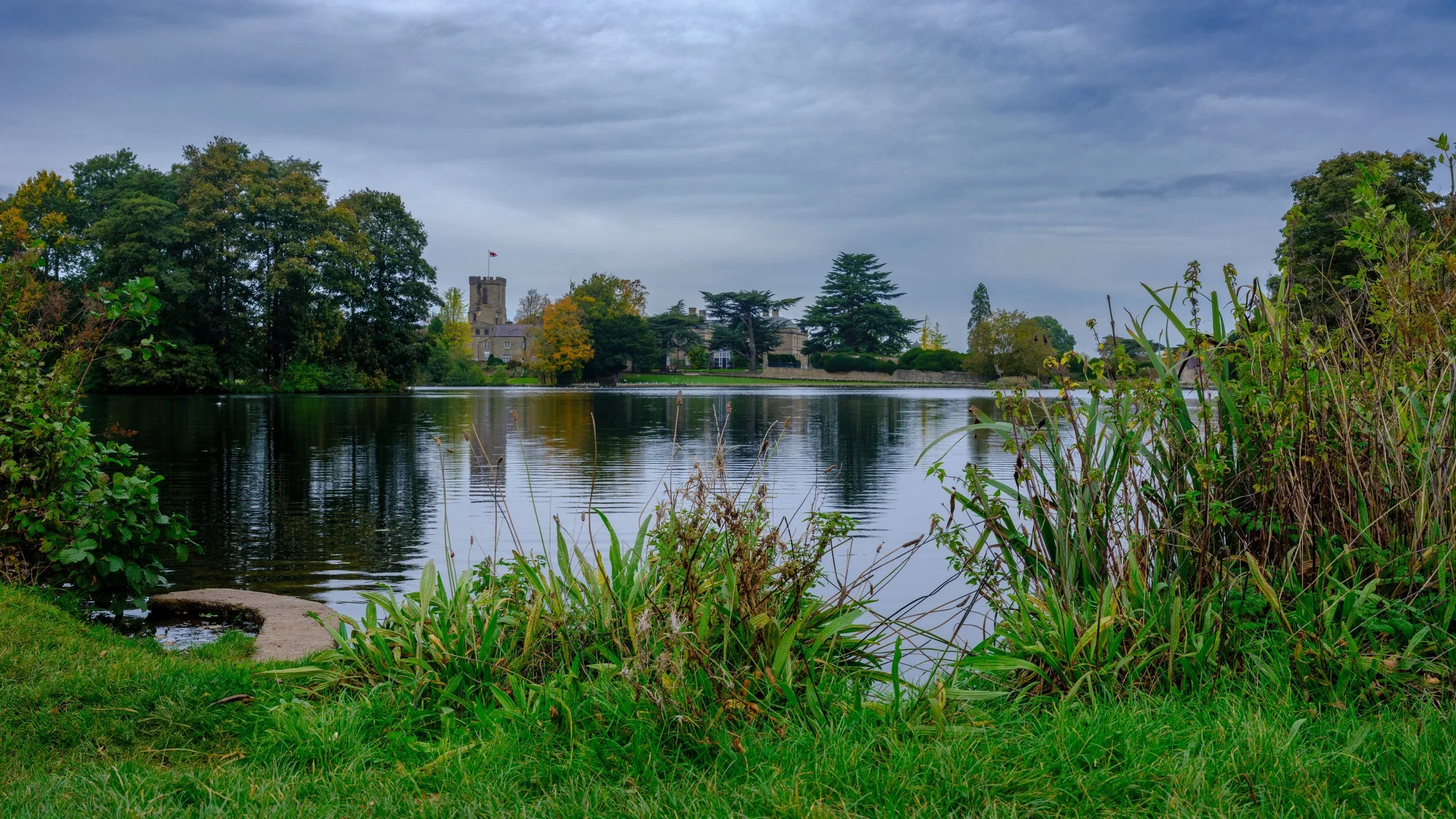
The Melbourne Hall Estate
What Should the Estate Look Like in 15 or 20 Years?
Many estate decisions have consequences that stretch well beyond the next financial year.
A building repaired today may still require a long-term use. A diversification idea might take several years to establish. Infrastructure investment may support future development. Decisions about land, tenancies or operations could affect the next generation.
This is where a long-term Estate Masterplan can become especially valuable.
Rather than trying to predict every detail of the future, a masterplan creates a coordinated direction for the estate over the next 15 to 20 years.
It can bring together:
The condition and use of existing assets
Maintenance and investment priorities
Potential development and diversification opportunities
Energy and operational efficiency
Woodland and land management
Existing occupancy arrangements
Sustainability and future growth
Family or business objectives for the next generation
The result is not necessarily a rigid programme that cannot change.
Estates, businesses and personal circumstances all evolve.
Instead, the masterplan provides a framework against which new decisions can be assessed. When an opportunity arises or circumstances change, the estate owner has a clearer understanding of how that decision fits into the bigger picture.
Estate Management Does Not Have to Begin with a Major Commitment
The idea of reviewing an entire estate can sound like a significant undertaking.
But it does not have to begin with a decision to develop land, refurbish numerous buildings or launch a completely new commercial venture.
The first stage is simply to establish what is there.
From mapping, surveys and asset recording, a clearer picture begins to emerge. Priorities can then be identified, opportunities explored and realistic next steps agreed.
Some estates may need support with a particular area first. Others may be ready to create a comprehensive long-term masterplan. Many will begin with one immediate concern and discover that it makes sense to consider the wider estate alongside it.
The purpose is not to create work where none is needed.
It is to replace fragmented information and reactive decisions with greater clarity.
A Joined-Up Approach to the Future of Your Estate
Rural estates are complex because their assets, activities and responsibilities are closely connected.
Land affects buildings. Occupancy affects investment. Maintenance decisions affect future uses. Planning opportunities affect value. Operational costs influence what can be delivered elsewhere.
Managing those areas independently can solve the immediate problem.
Managing them as part of one estate-wide strategy can create much greater long-term value.
At TUK Rural, we combine experience across rural property, planning, architecture, construction and project management to help estate owners and farming businesses understand their assets, identify practical opportunities and deliver projects successfully.
Whether your priority is reducing costs, improving efficiency, exploring diversification, managing estate projects or planning for the next generation, the most useful place to begin may be with a clearer picture of the estate as a whole.
If you would like to discuss your estate, the challenges you are facing or the opportunities you would like to explore, get in touch with the TUK Rural team.